In Santa Rosa, Two Rebuild-Era Homes Can List at the Same Price and Close on Totally Different Timelines
September 3, 2026
September 3, 2026
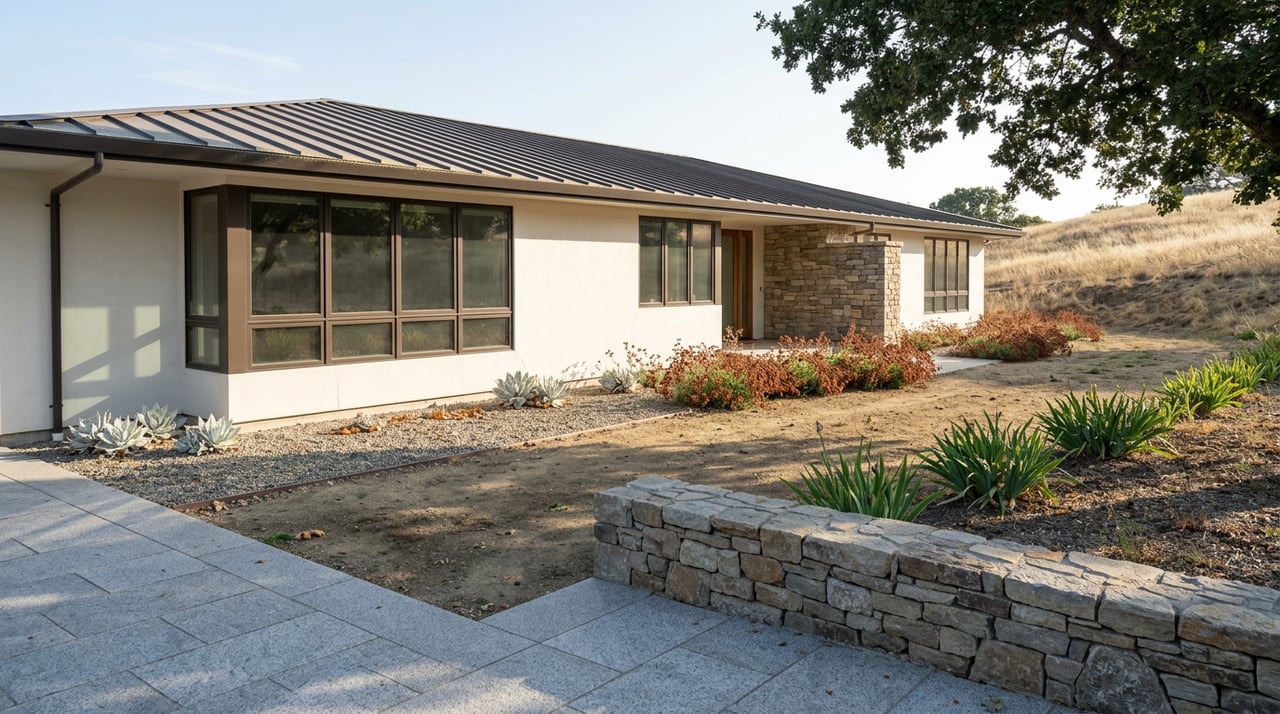
Two four-bedroom houses go on the market the same week, priced within a few thousand dollars of each other. Both were built within the last several years. Both have new roofs, new systems, and the kind of clean lines that photograph well for a listing. One sits in Fountaingrove. The other sits in Coffey Park. A buyer comparing them side by side sees two nearly identical products competing for the same budget.
What that comparison misses is what happens after the offer gets accepted. One of these homes closes on an ordinary timeline, with a standard-market insurance quote landing within a week of application. The other may need several rounds of shopping, a call to the California FAIR Plan, and a lender who understands what a Wildland-Urban Interface property requires before a loan contingency comes off. Same city. Same rough price bracket. Very different path to the closing table. If you're selling or buying in one of Santa Rosa's fire-rebuild or hillside neighborhoods this year, the reason for that gap is worth understanding before you're staring at a contingency deadline.
The divide traces back to the Tubbs Fire. Coffey Park, a flat, suburban subdivision built in the early 1980s, lost roughly 1,300 homes that night, and by the summer of 2020 about 95 percent of them were rebuilt or under construction. Fountaingrove, a smaller and hillier neighborhood to the east, burned largely flat as well, but its rebuild followed a different set of rules. Because Fountaingrove sits in a designated Wildland-Urban Interface zone, its new construction had to meet a higher fire-hardening standard than Coffey Park's flatland rebuild: ignition-resistant exteriors, ember-blocking vents, and windows and doors rated to resist fire for at least 20 minutes.
That distinction matters more than most buyers realize. Coffey Park's rebuild met standard California code, which local officials have called a model recovery for the state. But standard code and maximum fire resistance are not the same thing, and the insurance payouts that funded those rebuilds reflected the gap. Fountaingrove's homes, meanwhile, were built to a stricter standard specifically because of where they sit. The two neighborhoods ended up with fire-hardened housing stock of very different character, built under very different assumptions about the ground beneath them.
That difference in terrain, not construction quality, is what triggers California's Assembly Bill 38 disclosure requirement. AB 38 applies to homes built before 2010 that sit inside a state-mapped High or Very High Fire Hazard Severity Zone. The disclosure notice requirement took effect January 1, 2021, and a related requirement to document defensible space compliance followed on July 1, 2021. As of July 1, 2025, the disclosure also has to include the State Fire Marshal's list of low-cost retrofits and note which ones the seller has actually completed. The California Association of Realtors updated its standard Fire Hardening and Defensible Space Disclosure form that same year, asking sellers to check their property against twelve specific hardening conditions rather than answer in general terms.
The City of Santa Rosa's own guidance is direct about how this plays out locally: the city has no state-managed wildland area within its limits, but it does contain a defined Wildland-Urban Interface with CAL FIRE-designated High and Very High zones, and any property inside those zones has to comply. That single sentence explains why two houses a few miles apart can face completely different paperwork. It is not about which neighborhood name is on the listing. It is about which side of a fire hazard line drawn parcel by parcel, not block by block, a specific address happens to sit on.
This is where the story gets counterintuitive, and it's the part sellers in hillside neighborhoods most often get wrong. Insurers, including the FAIR Plan, price wildfire risk using a brush score tied to terrain and vegetation exposure, not the year a house was framed. A brand-new custom build on a Fountaingrove hillside lot can land in a higher-risk brush score bracket than a home built the same year on a flat, developed Coffey Park street, simply because of what surrounds the lot. Documented hardening moves the needle. A recent build date, by itself, does not.
The practical result is that a seller in Fountaingrove, Mark West, Larkfield-Wikiup, or the hillside pockets of Bennett Valley needs to treat insurance as a real underwriting question well before listing, while a seller in Coffey Park, West End, Roseland, or St. Rose is usually dealing with the standard market and can move through escrow without that extra step. Here's roughly how that plays out by area:
| Area | Typical Terrain | Fire Zone Pattern | What a Seller Usually Faces |
|---|---|---|---|
| Fountaingrove | Hillside, adjacent to open space | Often High or Very High | AB 38 disclosure likely; FAIR Plan plus a difference-in-conditions wrap is common |
| Mark West / Larkfield-Wikiup | Hillside and wooded fringe | Often High or Very High | Similar pattern to Fountaingrove |
| Bennett Valley (hillside pockets) | Mixed terrain | Varies by parcel | Disclosure required on some addresses, not others |
| Coffey Park | Flat, rebuilt post-2017 | Generally outside mapped zones | Standard-market insurance, no AB 38 trigger |
| West End / Roseland / St. Rose / central Santa Rosa | Flat, older housing stock | Generally outside mapped zones | Standard-market insurance, no AB 38 trigger |
The fact that Fire Hazard Severity Zone status is assigned parcel by parcel, not by neighborhood name, is the detail that trips people up most. Two homes on the same street can carry different designations depending on lot orientation and distance from open hillside. The only reliable way to know is to check the specific address against the state's current maps, not to assume based on where a neighborhood sits on the map in general.
Timing adds urgency to all of this right now. The FAIR Plan, California's insurer of last resort, has grown from about 124,000 policies statewide in 2019 to more than 675,000 as of mid-2026, a scale shift that tracks closely with the years since the Tubbs Fire and the broader wildfire seasons that followed it. On October 15, 2026, the FAIR Plan is raising rates by an average of 29.1 percent, with some policyholders in high-risk zones seeing their wildfire premiums roughly double. A wildfire-hardening discount launched in November 2025 can offset part of that increase, worth up to 16.4 percent off the wildfire portion of a premium, but only for homeowners who can document all twelve qualifying hardening measures.
For a seller in a flatland neighborhood, this rate hike is close to irrelevant. For a seller in a hillside zone, it is the kind of number that can change what a buyer's lender is willing to underwrite between the day an offer is accepted and the day the loan contingency is due to come off.
If you're preparing to sell in Fountaingrove, Mark West, Larkfield-Wikiup, or a hillside section of Bennett Valley, get an insurance quote before you list, not after you're under contract. Pull your property's Fire Hazard Severity Zone status directly rather than assuming based on your neighbors' experience, since the designation runs parcel by parcel. Gather documentation of any hardening work you've done, roof material, vent type, window rating, defensible space clearing, since that paperwork is what determines whether you qualify for a hardening discount and what you'll owe under the FHDS form. If you don't have a completed defensible space inspection report, know that state law allows you to write an agreement with the buyer to complete it within a year of closing, but that agreement has to be in writing and accepted before escrow closes.
If you're writing an offer on a home in one of these zones, treat the insurance quote as a real contingency item, not a formality you'll sort out later. Ask your lender early whether the property is likely to need a FAIR Plan policy paired with a difference-in-conditions wrap, since most lenders will not accept a FAIR Plan policy alone on a mortgaged property. Building that conversation into your financing plan before you're deep into a contingency period is the difference between a routine closing and a scramble in week three.
Does AB 38 apply to every home in Santa Rosa? No. It applies only to homes built before 2010 that sit inside a state-mapped High or Very High Fire Hazard Severity Zone. Most homes in flatland neighborhoods like Coffey Park, West End, Roseland, and St. Rose fall outside those zones entirely.
If my Fountaingrove home was rebuilt after 2017, am I exempt from AB 38? Often, yes, since the law's disclosure trigger is tied to the 2010 construction cutoff rather than the neighborhood's history. But confirm your specific build date and zone status rather than assuming, since some lots in the area were rebuilt on older foundations or carry mixed permit histories.
Is the FAIR Plan my only option if I'm in a high-risk zone? Not necessarily. Some carriers still write standard policies in parts of the Wildland-Urban Interface depending on brush score, construction, and documented hardening. It's worth getting more than one quote before assuming the FAIR Plan is the only path.
Does a newer home automatically get a better insurance rate? Not on its own. Location and vegetation exposure weigh heavily in how brush score is calculated, so a newer hillside home can still price higher than an older flatland one. Documented hardening measures move the number more than the calendar year on the permit.
If you're weighing a purchase or a listing in one of Santa Rosa's fire-affected neighborhoods, the disclosure paperwork and the insurance conversation need to happen together, not one after the other. That kind of coordination between the real estate side and the financing side is where a lot of Santa Rosa transactions either stay on schedule or stall. Austin Canum has spent more than two decades working both sides of Sonoma County transactions, and can walk you through what your specific parcel actually requires before you list or write an offer. Let's Connect.
Stay up to date on the latest real estate trends.
With over 20 years of experience in real estate and mortgage lending, Austin delivers personalized guidance, skilled negotiation, and exceptional service tailored to your goals. Whether you're buying, selling, or financing, you can count on a seamless experience built on trust, communication, and proven expertise.

AUSTIN CANUM REAL ESTATE
Austin Canum | CA DRE #01452415
[email protected]
(707) 548-7659
ADDRESS 2293 W Hearn Ave Santa Rosa, CA 95407